Question 3
Determine whether 97 and 172 are terms of the sequence for .
We need to find if 97 and 172 can be generated by the given formula.
Step 1 — Check for 97
Let's assume 97 is a term in the sequence. We set the formula equal to 97.
Let's add 3 to both sides.
Now we divide both sides by 5.
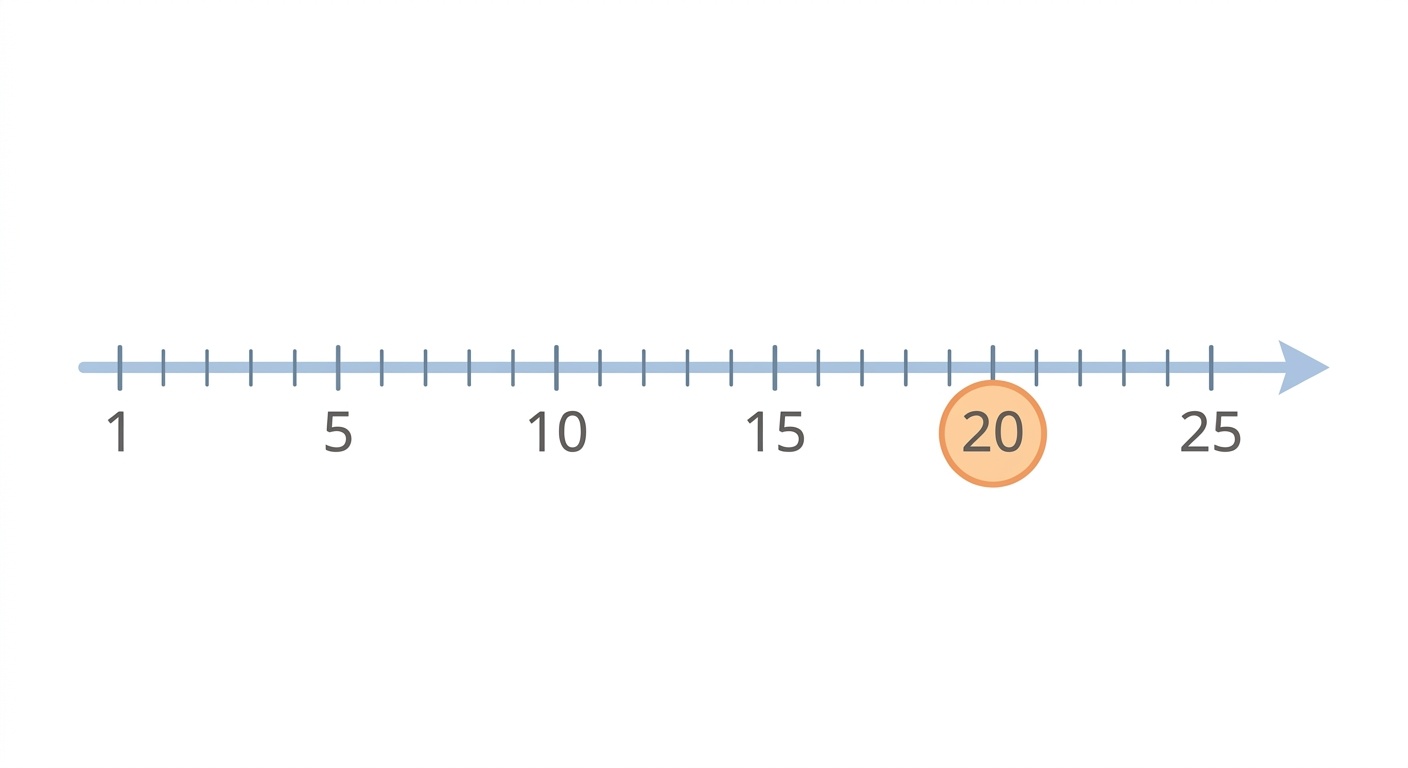
Since is a natural number, 97 is a term. It is the 20th term of the sequence.
Step 2 — Check for 172
Let's assume 172 is a term in the sequence. We set the formula equal to 172.
Let's add 3 to both sides.
Now we divide both sides by 5.
Since is a natural number, 172 is a term. It is the 35th term of the sequence.
Answer
(i) 97 is a term of the sequence. (ii) 172 is a term of the sequence.
More questions in Exercise 8.1
Find the first five terms of the sequence in which the term is given by, for :
(i)
(ii)
(iii)
Find the and terms of the sequence for .
Determine whether 97 and 172 are terms of the sequence for .
Which term of the sequence for is 607?
A sequence is given by the recursive rule , for . Find the first five terms of the sequence. Is 52 a term of this sequence? If so, which term is it?
Let , , , and for . Find and .