Question 5
2. Wavy Wave
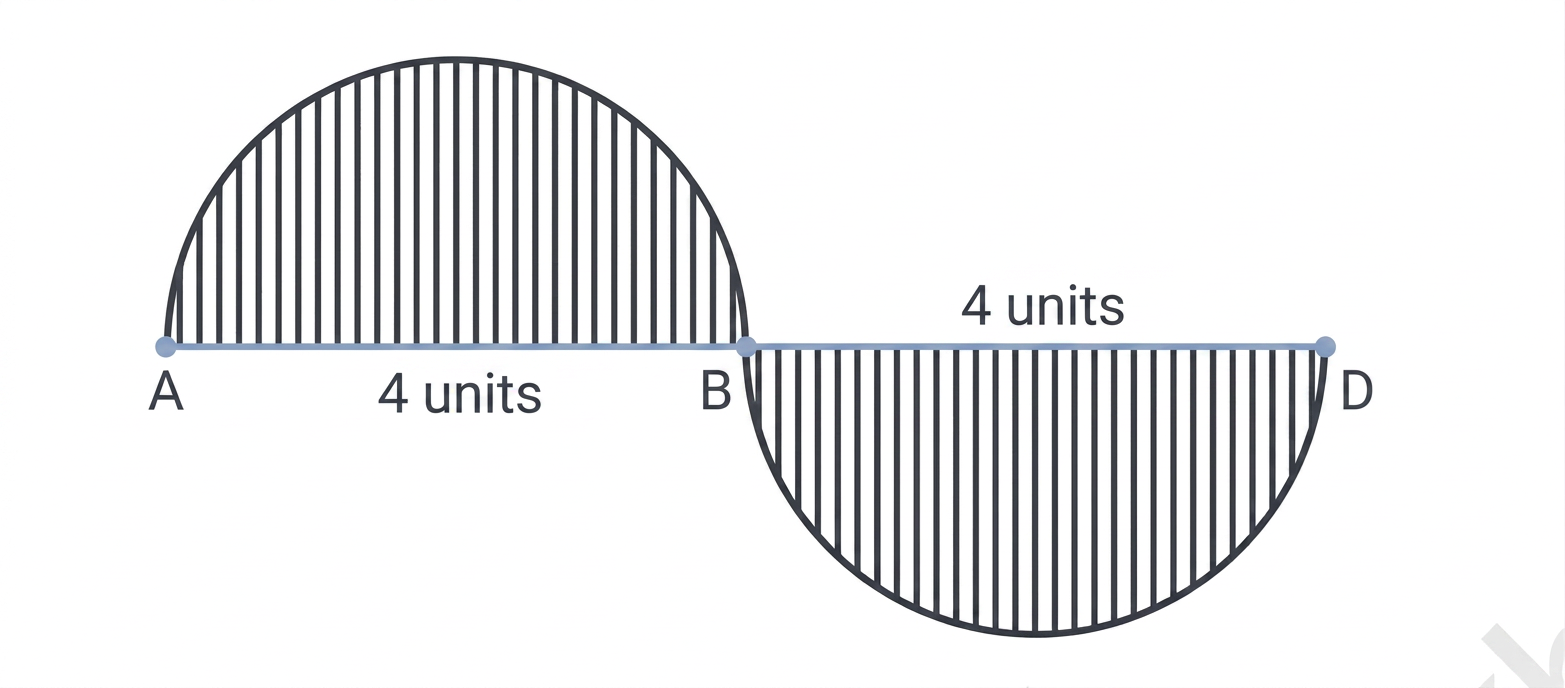
Construct this.
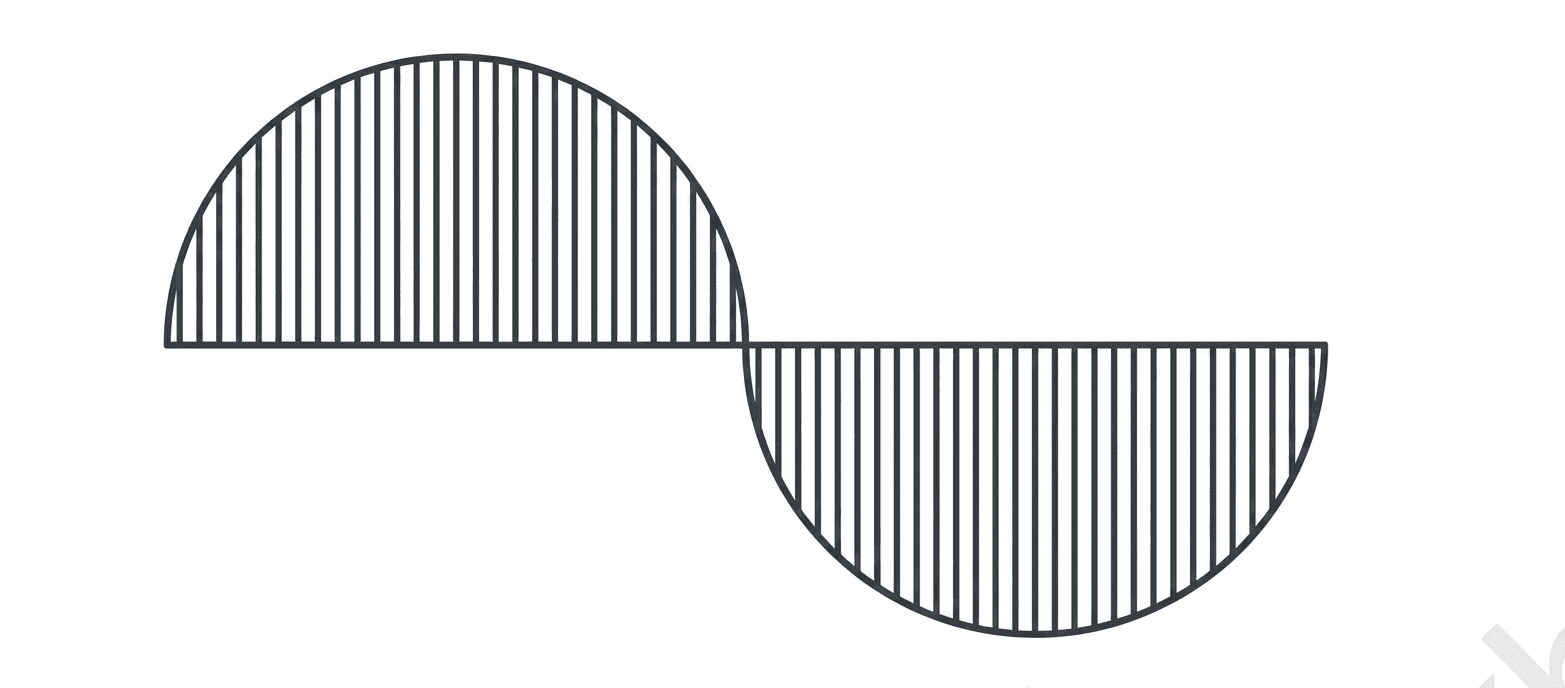
We will draw two half-circles. We will fill them with vertical lines.
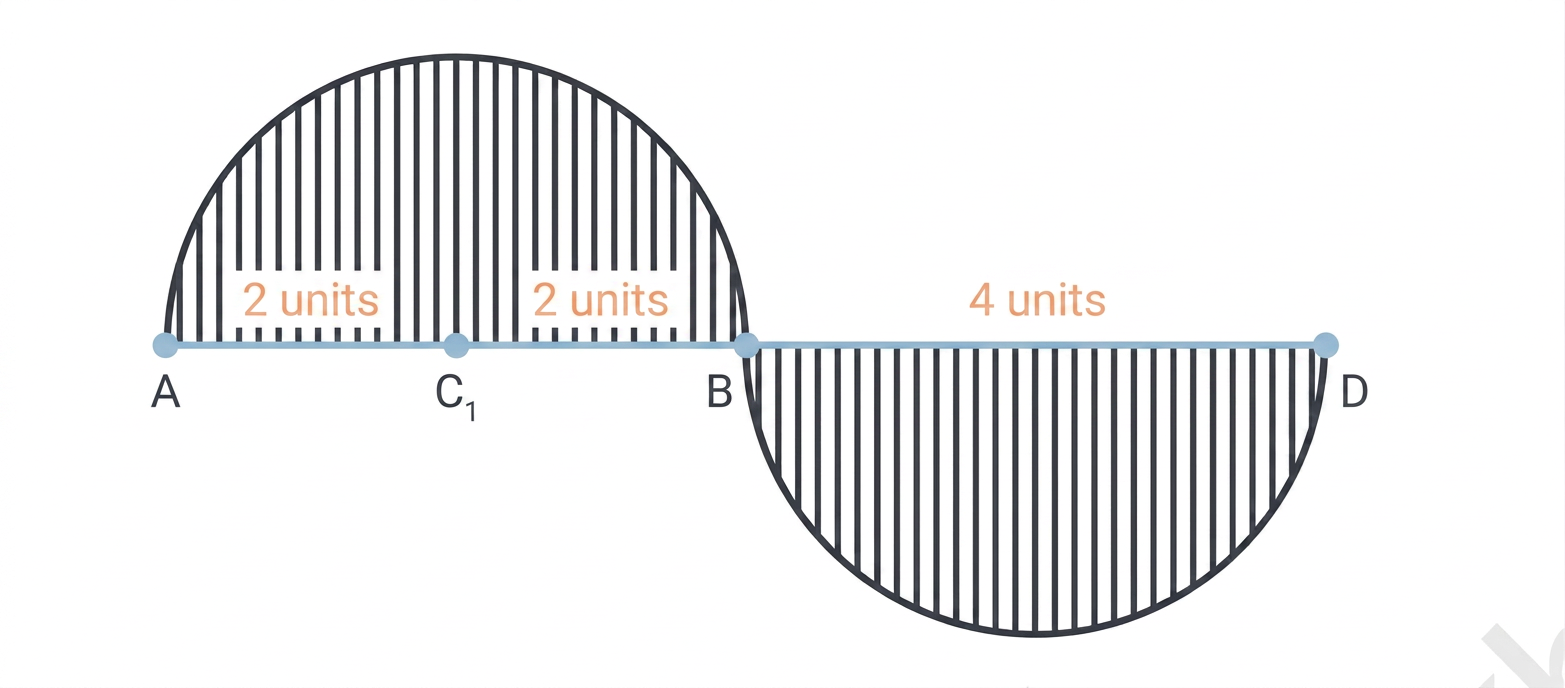
Step 1 — Draw the main line
Let us draw a straight horizontal line.
This line will be our base.
Let us mark a point A on this line.
Let us measure 4 units from A to the right.
Let us mark this new point B.
Let us measure another 4 units from B to the right.
Let us mark this point D.
Step 2 — Draw the first half-circle
Let us find the middle point of AB.
The distance from A to B is 4 units.
Half of 4 units is 2 units.
Let us mark this middle point C1.
C1 is 2 units from A and B.
Place the compass needle on C1.
Open the compass to reach point A.
The compass radius is 2 units.
Draw a half-circle above the line. It goes from A to B.
Step 3 — Draw the second half-circle
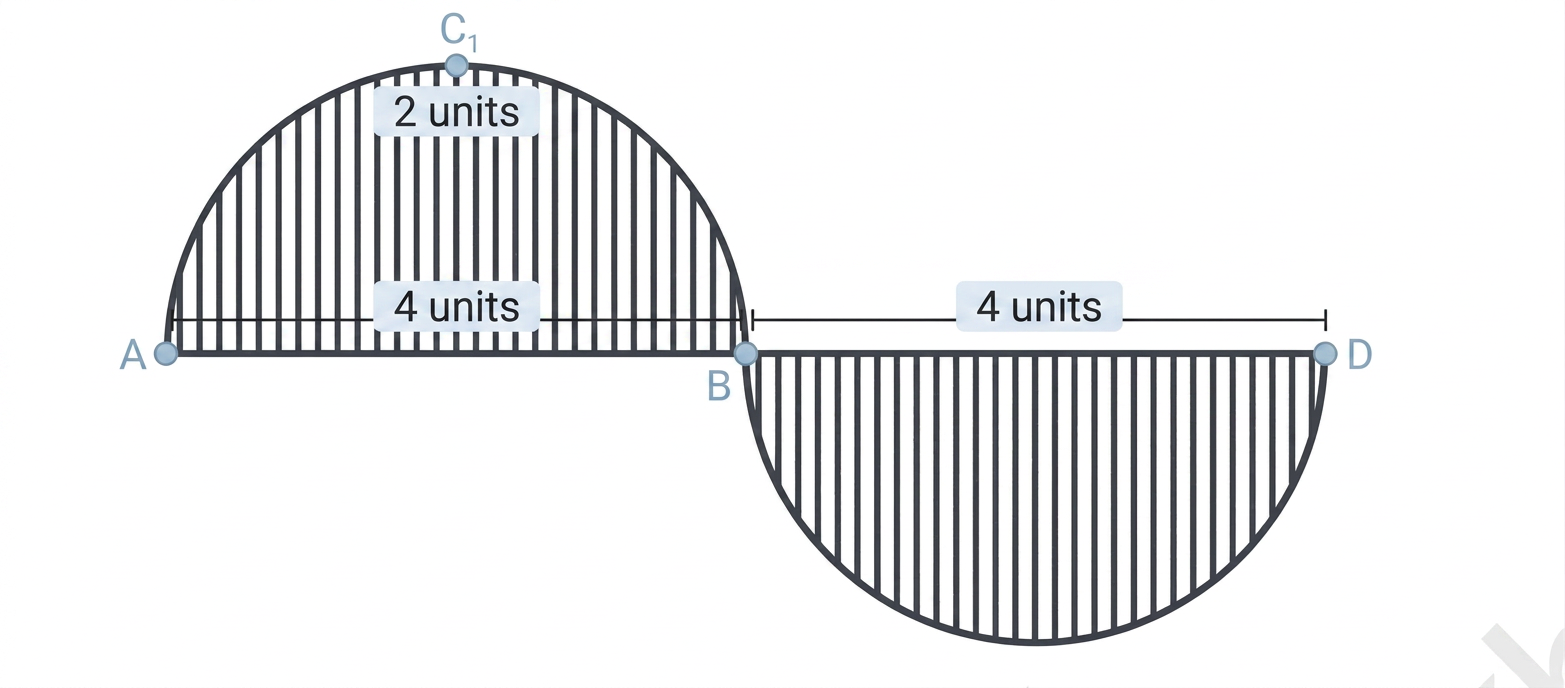
Let us find the middle point of BD.
The distance from B to D is 4 units.
Half of 4 units is 2 units.
Let us mark this middle point C2.
C2 is 2 units from B and D.
Place the compass needle on C2.
Open the compass to reach point B.
The compass radius is 2 units.
Draw a half-circle below the line. It goes from B to D.
Step 4 — Add the vertical lines
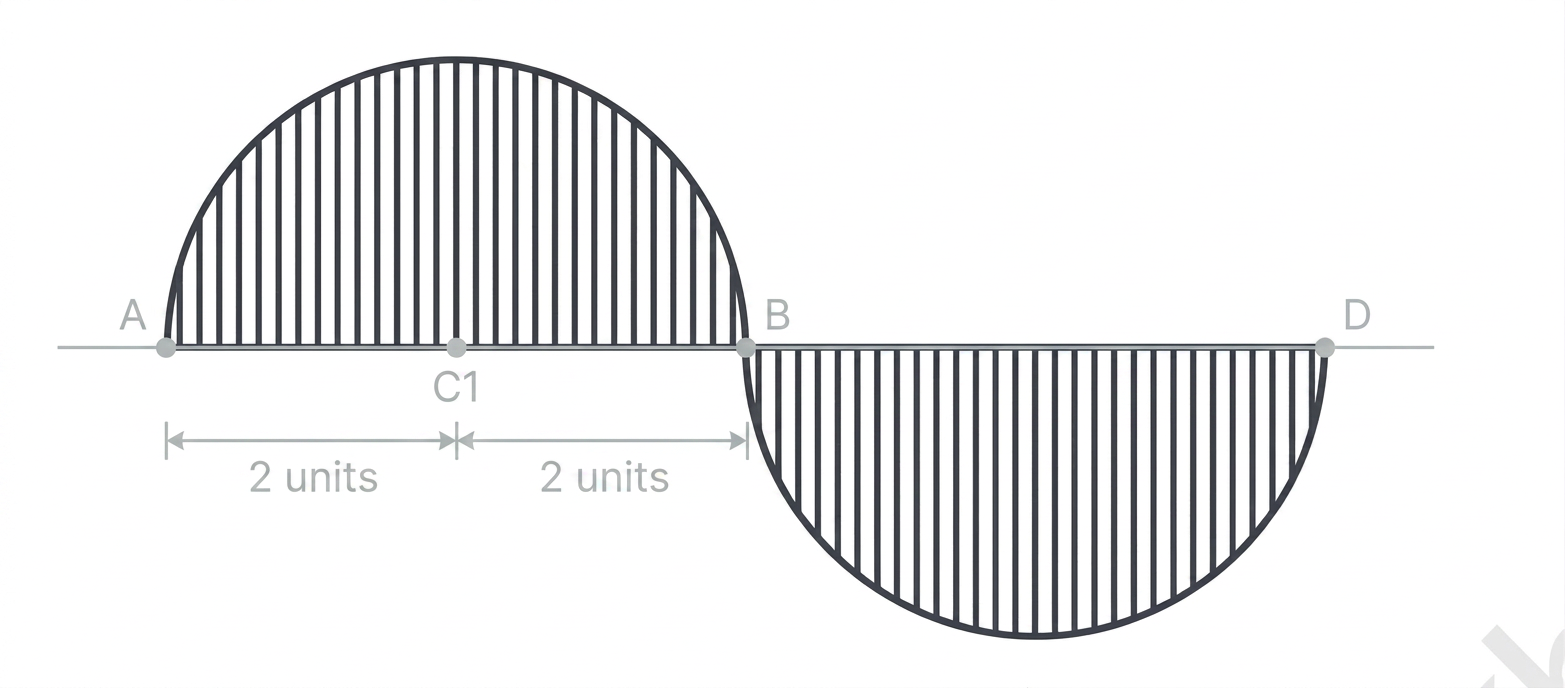
Let us mark many small points between A and B.
Make these points equally spaced.
From each point, draw a vertical line upwards.
Draw until the line touches the first half-circle.
Let us mark many small points between B and D.
Make these points equally spaced.
From each point, draw a vertical line downwards.
Draw until the line touches the second half-circle.
More questions in A
Observe the following figures and try drawing them freehand.
Mark a point ‘P’ in your notebook. Then, mark as many points as possible, in different directions, that are 4 cm away from P.
Think: Imagine marking all the points of 4 cm distance from the point P. How would they look?
Try to draw it and verify if it is correct by taking some points on the curve and checking if their distances from P are indeed 4 cm. Explore, if you have not already done so, and see if a compass can be used for this purpose.
You can start by marking a few points of distance 4 cm from P using the compass. How can this be done?
Having explored the use of a compass, go ahead and recreate the images in Fig. 8.1. Can you make the figures look as good as the figures shown there? Try again if you want to!
Also, has the use of instruments made the construction easier?
Construct
1. A Person
How will you draw this?
2. Wavy Wave
Construct this.
Make other artwork of your choice with a ruler and a compass.
Explore
How should the rectangle be constructed so that the diagonal divides the opposite angles into equal parts?
How will you record your observations? First, identify the parameters that need to be tracked. They are the sides of the rectangle and the 8 angles formed by the two diagonals. Are there any other measurements that you would want to keep track of?
In your experimentation, did you consider the case when all four sides of the rectangle are equal? That is, did you consider the case of a square? See what happens in this special case!
Math Talk
What general laws did you observe with respect to the angles and sides? Try to frame and discuss them with your classmates.
How can one be sure if the laws that you have observed will always be true?