Question 1
Draw the graphs of the following sets of lines. In each case, reflect on the role of 'a' and 'b'.
(i)
(ii)
(iii)
(iv)
(v)
We will draw graphs of linear equations. We will observe the roles of 'a' and 'b'.
Step 1 — Graphing with positive 'a'
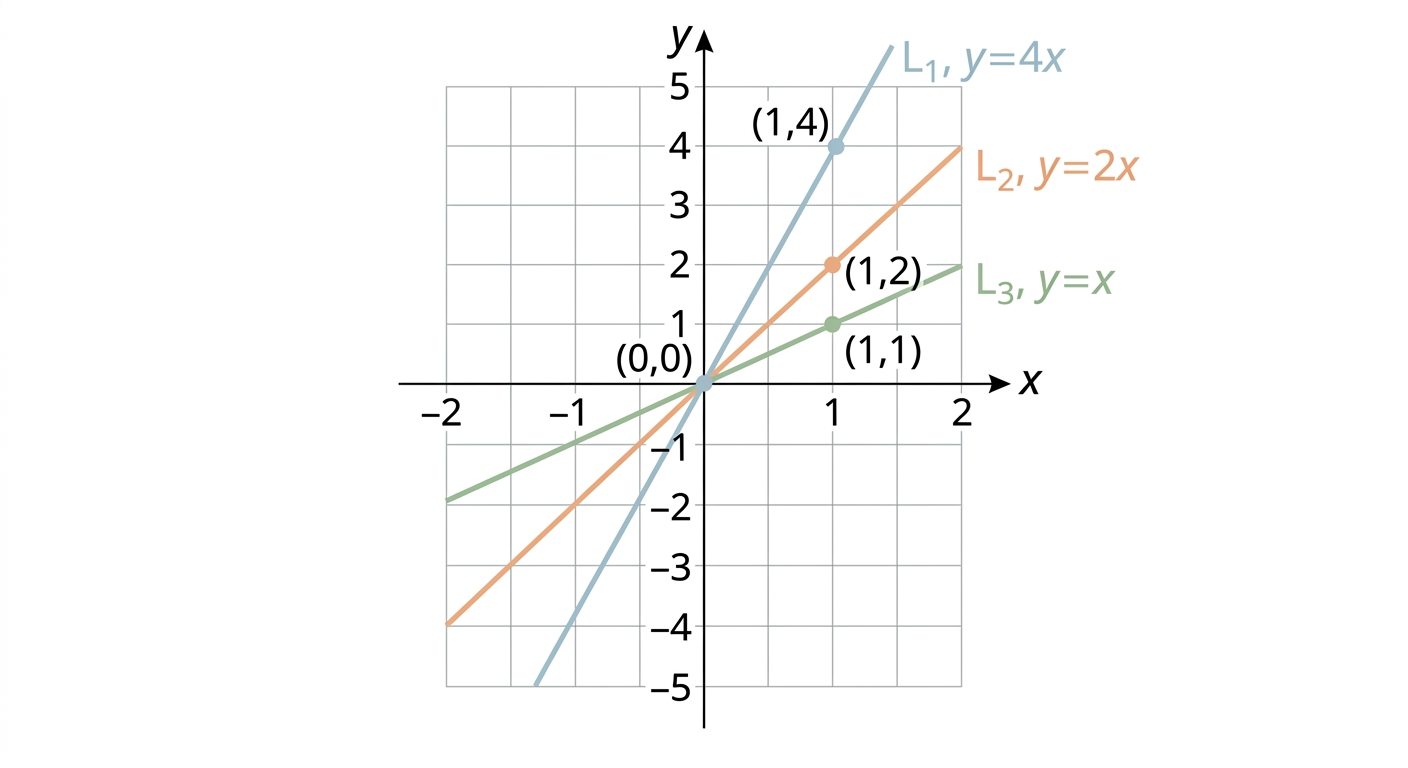
Let's plot points for each line. All lines pass through the origin (0,0).
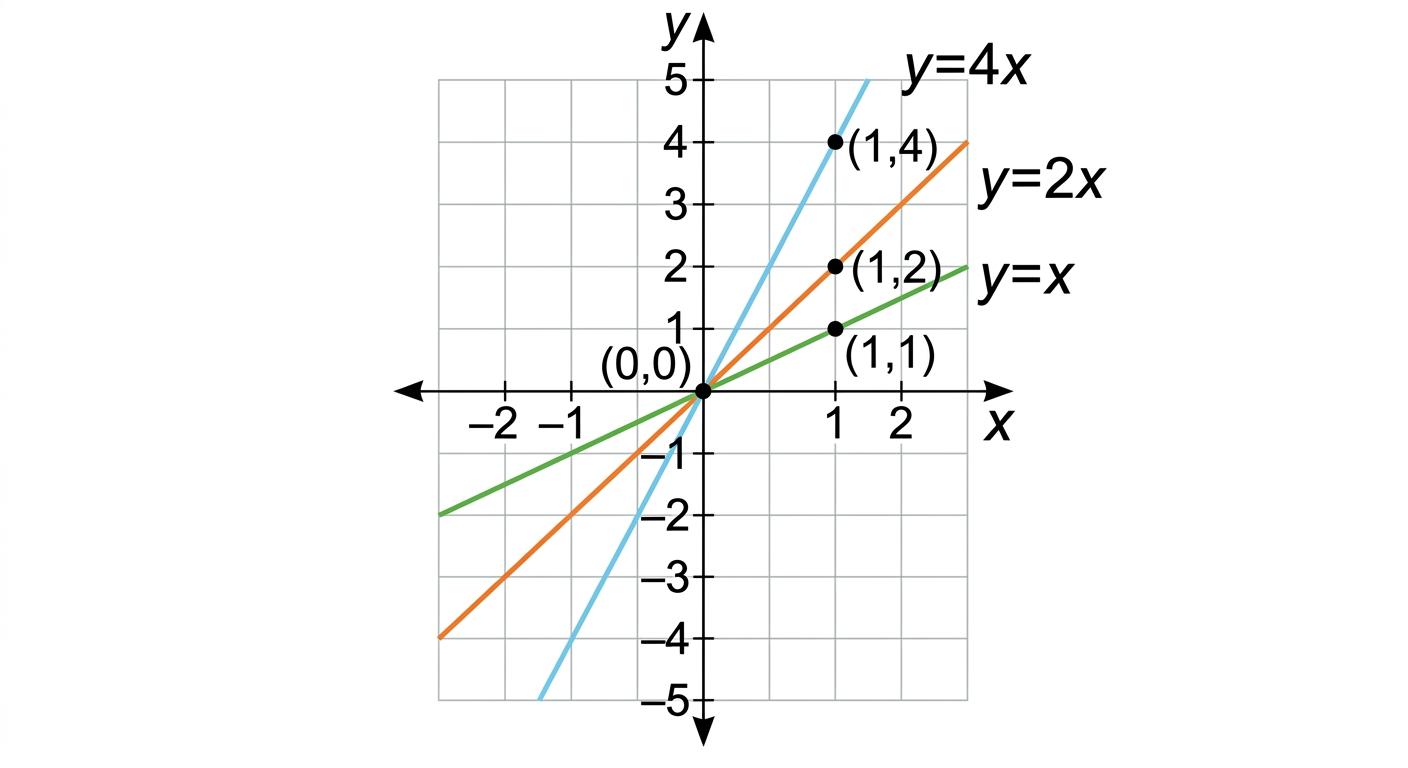
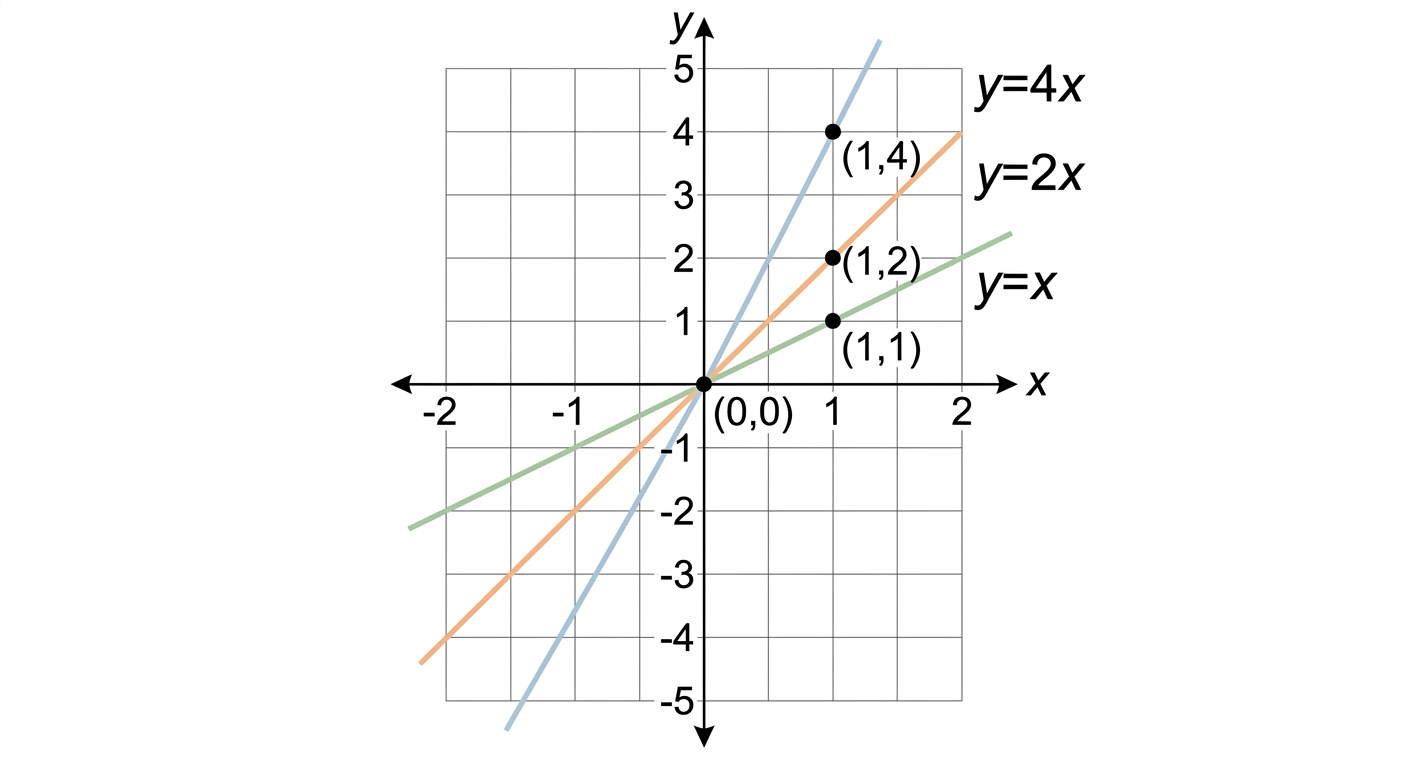
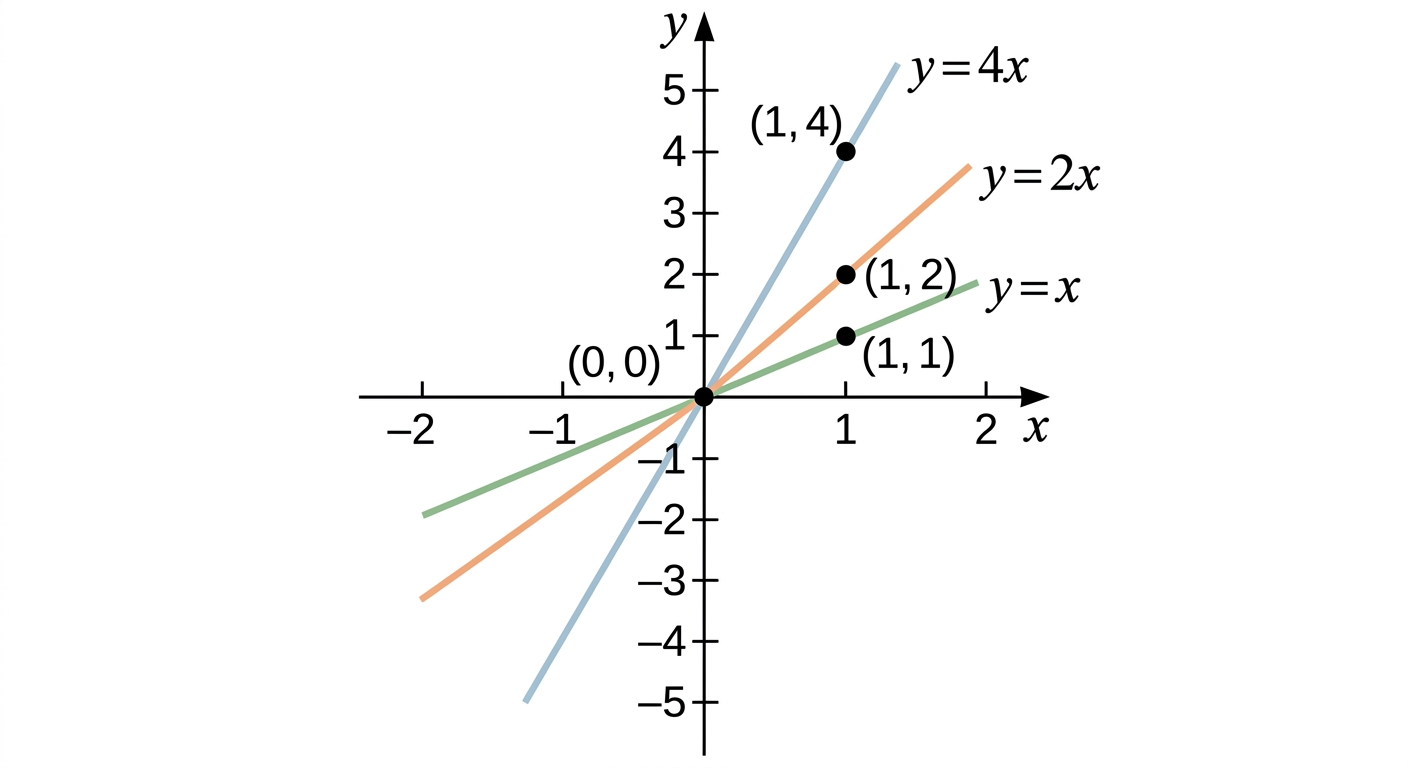
For : If , then . If , then . Points are (0,0) and (1,4).
For : If , then . If , then . Points are (0,0) and (1,2).
For : If , then . If , then . Points are (0,0) and (1,1).
Let's draw these lines on a graph.
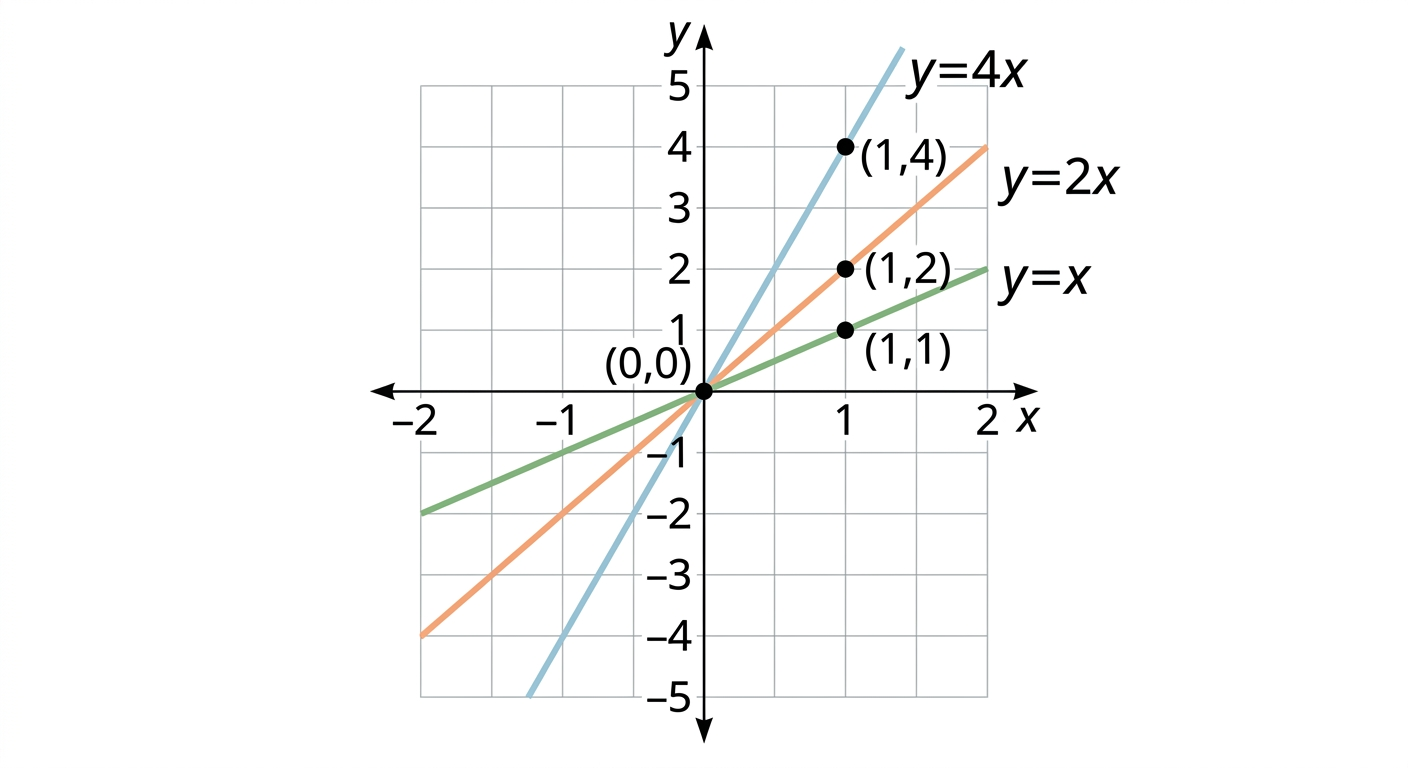
All these lines are of the form . The constant term 'b' is 0.
The value of 'a' is the coefficient of 'x'. It tells us the slope.
Step 2 — Graphing with negative 'a'
Let's plot points for these lines. All lines pass through the origin (0,0).
For : If , then . If , then . Points are (0,0) and (1,-6).
For : If , then . If , then . Points are (0,0) and (1,-3).
For : If , then . If , then . Points are (0,0) and (1,-1).
Let's draw these lines on a graph.
All these lines are of the form . The constant term 'b' is 0.
The value of 'a' is negative. This means the lines slope downwards.
Step 3 — Graphing and
Let's plot points for these two lines. Both pass through the origin (0,0).
For : If , then . If , then . Points are (0,0) and (1,5).
For : If , then . If , then . Points are (0,0) and (1,-5).
Let's draw these lines on a graph.
Both lines are of the form . The constant term 'b' is 0.
The 'a' values are 5 and -5. They have the same magnitude.
Step 4 — Graphing with constant 'a'
Let's plot points for each line. The coefficient of 'x' is 3 for all.
For : If , then . If , then . Points are (0,-1) and (1,2).
For : If , then . If , then . Points are (0,0) and (1,3).
For : If , then . If , then . Points are (0,1) and (1,4).
Let's draw these lines on a graph.
All these lines have the same slope, which is 3.
The value of 'b' changes for each line. This is the y-intercept.
Step 5 — Graphing with varying 'a' and 'b'
Let's plot points for each line.
For : If , then . If , then . Points are (0,-3) and (1,-5).
For : If , then . If , then . Points are (0,0) and (1,-2).
For : If , then . If , then . Points are (0,3) and (1,5).
Let's draw these lines on a graph.
Lines and have the same slope (-2).
Line has a positive slope (2). It slopes in the opposite direction.
Answer
(i) All lines pass through the origin. A larger positive 'a' makes the line steeper. (ii) All lines pass through the origin. A larger absolute value of negative 'a' makes the downward slope steeper. (iii) Both lines pass through the origin. They have the same steepness but opposite directions. (iv) All lines are parallel. The value of 'b' shifts the line up or down. (v) Lines and are parallel. Line slopes in the opposite direction. 'b' sets the y-intercept. Conclusion: The coefficient 'a' (of x) controls the slope. This means it controls steepness and direction. The constant term 'b' controls the vertical shift. This is the y-intercept.